
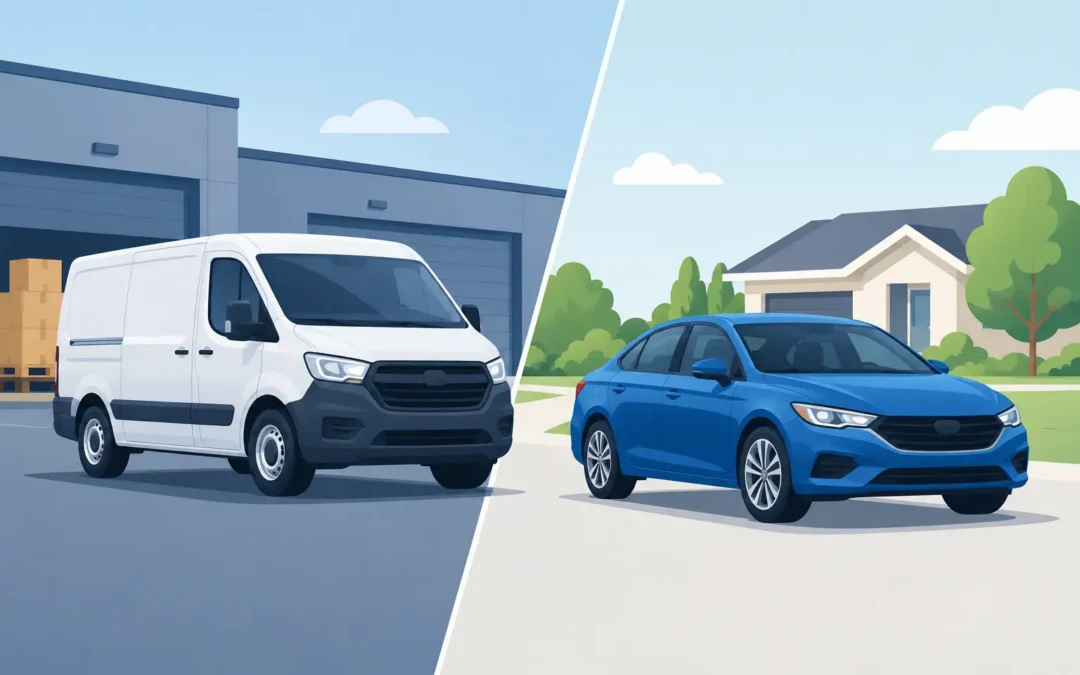
A vehicle can look the same on the road whether it is headed to a family errand or a customer appointment. But commercial auto versus personal auto insurance can lead to very different coverage outcomes after an accident. The deciding factor is not simply whether the vehicle has a company logo or is parked at a business. It is how the vehicle is owned, used, driven, and connected to your work.
For Florida business owners, that distinction matters. A personal auto policy may provide some limited coverage for occasional business use, but it is not designed to protect the full range of risks that come with operating a business. Choosing the right policy helps protect your vehicle, your employees, your business assets, and the people who may be injured in an accident.
What Personal Auto Insurance Is Designed to Cover
Personal auto insurance is built for individuals and families who use their vehicles for everyday transportation. That can include commuting to a regular job, running errands, taking vacations, transporting children, and visiting friends or family.
A typical personal policy can include liability coverage, collision coverage, comprehensive coverage, uninsured motorist protection, medical payments coverage, and rental reimbursement. The exact options and limits depend on the carrier and policy you choose.
Personal coverage may still apply when you drive to work or occasionally use your car for a small work-related errand. For example, a real estate professional driving to show a home or an office employee taking documents to a client may have coverage under a personal policy, depending on the insurer and the details of the trip.
However, occasional business use is not the same as using a vehicle as part of business operations. Once driving becomes central to the work, the limits of a personal policy can become a serious concern.
When Commercial Auto Versus Personal Auto Becomes a Real Issue
Commercial auto insurance is intended for vehicles used in connection with a business. It can cover cars, vans, pickup trucks, box trucks, and other vehicles owned, leased, hired, or used by a business. It also offers coverage structures that better fit the liability exposures businesses face.
The need for commercial coverage often comes down to a few practical questions: Who owns or leases the vehicle? Who drives it? What is it used to transport? How often is it used for work? Is the business paid to deliver people, goods, or services?
A personal auto policy may not be enough when a vehicle is titled in the name of a business, regularly carries tools or equipment, makes deliveries, transports clients, or is driven by employees. The same applies if a business owner uses a personal vehicle extensively for client visits, sales calls, or transporting inventory.
Consider a few common examples. A contractor who drives a pickup to job sites and carries ladders, materials, and expensive tools has a different risk profile than a homeowner using the same pickup on weekends. A florist delivering arrangements, a restaurant making deliveries, and a cleaning company sending employees to homes all rely on vehicles as part of daily operations. Those situations usually call for a conversation about commercial auto coverage.
Key Differences in Coverage and Protection
The clearest difference between personal and commercial auto insurance is that commercial policies are structured around business liability. A serious accident involving a work vehicle can affect far more than the driver. It can create claims against the company, interrupt operations, damage customer property, and put business income at risk.
Commercial auto policies can offer higher liability limits than many personal policies. Higher limits may be appropriate when your vehicle travels frequently, operates in busy areas, carries equipment, or has employees behind the wheel. The right limit depends on your business, contracts, assets, and tolerance for risk.
Commercial coverage can also address vehicles that are owned by the business or used by multiple drivers. If employees drive a company vehicle, a commercial policy can be tailored to the business rather than relying on a personal policy that may restrict who is covered or how the vehicle is used.
Another difference involves hired and non-owned auto liability. This coverage can help protect a business when employees use their own vehicles for work-related tasks or when the business rents or borrows a vehicle. It does not replace the employee’s personal auto insurance, and it does not generally cover physical damage to the employee’s car. Still, it can be a valuable part of a broader business insurance plan when personal vehicles are used for deliveries, errands, or client visits.
Business Use Does Not Always Mean Commercial Coverage
There is no single rule that applies to every Florida driver. Some business-related use may fit within a personal auto policy, particularly when it is occasional and does not involve delivery, transporting passengers for a fee, or carrying business property as a regular part of the job.
For instance, driving yourself to a workplace is typically considered personal use, even if you are self-employed. A consultant who occasionally drives to meetings may be able to use a personal vehicle policy with a business-use designation, depending on the carrier. A salesperson who spends most of the week visiting clients may need something more specialized.
The details matter, and assumptions can be costly. Insurance applications ask how vehicles are used for a reason. If the stated use does not match the actual use at the time of a loss, coverage questions may arise. Being clear about your work activities before a claim occurs is the better approach.
Situations That Usually Need a Closer Review
Business owners should review their auto coverage when they begin using a vehicle differently, add drivers, purchase a vehicle through the company, or expand services. A policy that worked when a business was new may not fit after the business adds employees, takes on larger jobs, or begins making regular deliveries.
A closer review is especially worthwhile if your business does any of the following:
- Delivers food, products, packages, materials, or equipment
- Transports customers, patients, passengers, or clients
- Has employees who drive for work or run business errands
- Uses a vehicle to haul tools, inventory, trailers, or job-site equipment
- Owns, leases, or registers a vehicle in the business name
- Requires higher liability limits under a lease, contract, or client agreement
Rideshare and delivery app driving deserve separate attention. Coverage can change depending on whether the driver is waiting for an assignment, traveling to a pickup, or actively transporting an order or passenger. The platform may provide some coverage during certain phases, but limits and exclusions can apply. A standard personal auto policy may not cover all periods of app-based driving.
How to Choose the Right Policy for Your Vehicle Use
Start with an honest picture of how each vehicle is used. Include who drives it, how many miles it travels for work, whether it carries people or property, where it is parked, and whether it is owned personally or by the business. A vehicle used only once a month for a client visit presents a different exposure than one on the road every day.
Next, consider the financial impact of a major accident. State minimum requirements may satisfy a legal requirement, but they may not be enough to protect a growing business with payroll, equipment, contracts, and future income at stake. Liability limits should reflect what you could lose, not simply the lowest available premium.
It also helps to coordinate your auto coverage with the rest of your insurance program. A contractor, for example, may need commercial auto coverage alongside general liability, workers’ compensation, tools and equipment coverage, and an umbrella policy. Looking at these policies together can reveal gaps or overlapping protection.
An independent agency can compare options from multiple carriers and help identify whether personal coverage, commercial coverage, or a combination of policies fits your situation. At Lane Insurance Group, that conversation starts with how your vehicles support your life or your business, not with a one-size-fits-all answer.
A Clear Answer Before You Need to File a Claim
The right policy is easier to arrange before a new employee starts driving, before you accept a delivery contract, or before an accident turns a routine workday into a costly problem. If your vehicle use has changed, take a few minutes to review it with an insurance professional. Clear information now can help keep your family, employees, customers, and business moving forward with greater confidence.