
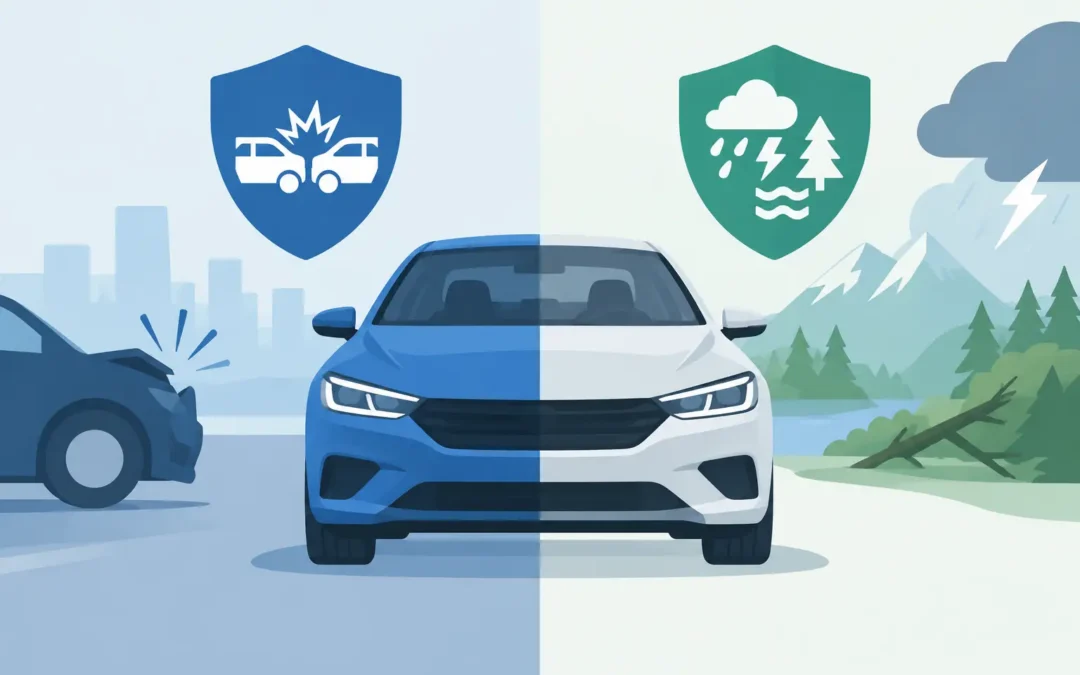
A damaged vehicle can create two separate questions at once: What caused the loss, and does your policy cover the repair? This collision comprehensive comparison helps Florida drivers understand the difference before a crash, falling tree limb, flood, or theft turns coverage details into an urgent concern. Both cover damage to your own vehicle, but they respond to very different events.
For many drivers, the right choice is not simply collision or comprehensive. It is deciding whether the value of the vehicle, your deductible, your loan requirements, and your financial comfort level justify carrying one or both coverages. A clear answer starts with knowing what each policy section is designed to do.
Collision Comprehensive Comparison: The Core Difference
Collision coverage generally pays for damage to your vehicle when it hits another vehicle or object, or when it overturns. Comprehensive coverage, often called other-than-collision coverage, generally pays for losses caused by events outside a crash.
If you back into a concrete post in a parking lot, collision coverage may help pay to repair your bumper after your deductible. If a storm drops a branch on the same vehicle while it is parked, comprehensive coverage may apply instead. The damage may look similar, but the cause determines which coverage responds.
Neither coverage replaces liability insurance. Liability coverage helps pay for injuries or property damage you cause to others in a covered accident. Collision and comprehensive are about protecting the vehicle you own, lease, or finance.
What Collision Coverage Typically Pays For
Collision coverage is intended for direct impact losses. It can apply whether you are at fault, another driver is at fault, or the other driver cannot be identified. Your insurer will review the facts, your policy, and the damage before determining payment.
Common collision claims include hitting another car, striking a guardrail, sliding into a mailbox, or rolling over after losing control. Damage from a pothole may also be handled as a collision claim in many situations, depending on the policy language and circumstances.
Your deductible applies
A deductible is the amount you agree to pay out of pocket before covered physical damage benefits begin. With a $1,000 collision deductible and $4,000 in covered repair costs, the insurer would generally pay $3,000, subject to the terms of the policy.
Choosing a higher deductible can reduce your premium, but it also means a larger expense after an accident. A deductible should be an amount you could reasonably pay without creating a financial strain. It is worth checking that amount before an accident, not while arranging repairs.
Payments are limited by vehicle value
Collision coverage does not automatically mean every repair will be approved, regardless of cost. If repair costs approach or exceed your vehicle’s actual cash value, the insurer may declare it a total loss. Actual cash value reflects the vehicle’s market value immediately before the loss, taking age, mileage, condition, and local market conditions into account.
That is especially relevant for older vehicles. A driver may pay for collision coverage year after year, then find that a major accident results in a settlement that is lower than the cost of replacing the vehicle with a newer one. The coverage can still be valuable, but the trade-off deserves an annual review.
What Comprehensive Coverage Typically Pays For
Comprehensive coverage addresses many risks that occur while your vehicle is parked or simply operating normally. It commonly covers theft, vandalism, fire, hail, windstorm damage, falling objects, animal strikes, and certain flood-related losses. Broken windshield glass is also frequently covered under comprehensive, although deductibles and glass provisions vary by insurer and policy.
Florida drivers have good reason to consider these exposures. Heavy rain, tropical weather, flying debris, vehicle theft, and animal-related damage can all happen without another vehicle ever making contact with yours. If water enters a vehicle during a flood event, for example, comprehensive coverage may be the coverage section that responds.
Comprehensive does not cover normal maintenance, mechanical breakdown, wear and tear, or damage caused by neglect. A failed engine due to age is not the same as engine damage caused by a covered flood. The source of the loss matters.
Like collision, comprehensive usually has a deductible. Some drivers choose different deductible amounts for collision and comprehensive because they see the risks differently. A lower comprehensive deductible may make sense for a vehicle frequently parked outdoors, while a higher collision deductible may be more comfortable for a driver with a strong emergency fund. There is no single deductible that fits every household.
When Carrying Both Makes Sense
If your vehicle is leased or financed, your lender will usually require collision and comprehensive coverage until the loan or lease is satisfied. This protects the lender’s interest in the vehicle, but it also protects you from being left with a loan balance after a major covered loss.
For a vehicle you own outright, the decision is more personal. Consider the vehicle’s actual cash value, your ability to replace it, where you park, how often you drive, and the premium difference between coverage options. Keeping both coverages often makes sense when losing the vehicle would create a serious financial setback.
It may be reasonable to reassess physical damage coverage when a vehicle’s value has declined substantially. However, dropping coverage solely because a vehicle is older can be shortsighted. A well-maintained older vehicle may still be expensive to replace, and Florida weather can damage any vehicle regardless of its age.
Florida Coverage Decisions Need a Wider View
Florida requires drivers to carry personal injury protection and property damage liability coverage at minimum required limits. Those coverages do not repair your own vehicle after you collide with another car, a pole, or a wall. They also do not provide the same protection from theft, storm damage, or falling objects that comprehensive coverage can offer.
Uninsured and underinsured motorist coverage, bodily injury liability, medical payments coverage, rental reimbursement, and roadside assistance are separate decisions that may also affect your financial protection after an accident. For example, collision may repair your car after a crash with an uninsured driver, but uninsured motorist bodily injury coverage addresses a different concern: injuries to you and qualifying passengers.
This is why a policy should be viewed as a coordinated plan rather than a collection of individual checkboxes. Saving money by removing one coverage can be appropriate in some situations, but only after considering what loss you would be accepting in return.
How to Choose the Right Deductible and Coverage Mix
Start with a practical question: If your vehicle were damaged tomorrow, could you comfortably repair or replace it without insurance proceeds? Then compare that answer with the annual cost of collision and comprehensive coverage and the deductible you would owe.
A useful review should account for these four factors:
- Your vehicle’s current actual cash value and any remaining loan or lease balance.
- The cost difference between low and high deductibles for both coverages.
- Your exposure to crashes, weather, theft, flooding, and outdoor parking conditions.
- The amount of savings you can access quickly after a covered loss.
It can also help to ask whether you use the vehicle for commuting, client visits, deliveries, or family transportation. A vehicle that is essential to your income or household routine may deserve stronger protection than one used only occasionally.
An independent agency can compare coverage structures and deductibles across multiple insurers rather than limiting the conversation to one carrier’s options. Lane Insurance Group can help Florida drivers review those choices in plain language, including how changes could affect both premium and out-of-pocket costs.
What to Do After a Covered Loss
After an accident or other vehicle damage, prioritize safety and document the scene when it is safe to do so. Take photos, gather contact and insurance information from other drivers when applicable, and report theft or vandalism to law enforcement. Promptly notify your insurance carrier or agency so the claim process can begin.
Avoid authorizing non-emergency repairs before the insurer has had an opportunity to review the damage, unless the vehicle needs immediate work to prevent further loss or to remain safe. Keep receipts for towing, temporary protective measures, and other related expenses. Your policy may address some of these costs, but claim handling depends on the specific facts and coverage selected.
The best time to make a collision and comprehensive decision is while you have time to compare options, ask questions, and adjust your deductible thoughtfully. A policy review now can help make the next unexpected event feel far more manageable.