
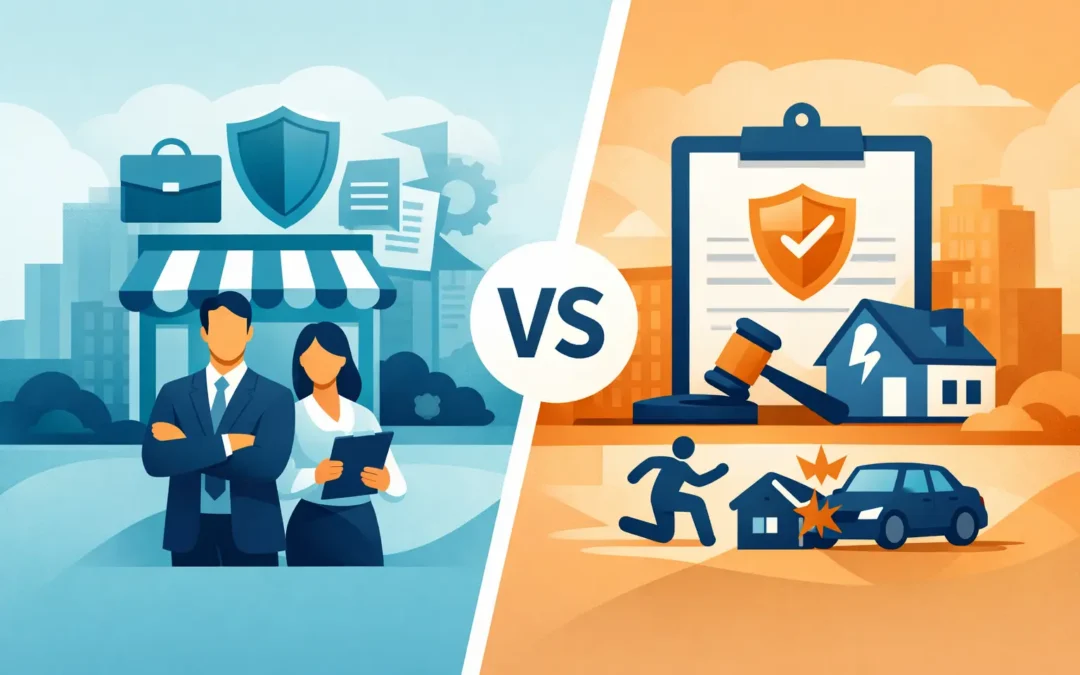
A customer slips near your front entrance. A small fire damages your office equipment. A client says your business caused property damage during a job. Those situations can trigger very different insurance needs, which is why the choice between a business owners policy vs general liability matters more than many owners realize.
If you run a Florida business, the right answer is not always one or the other. General liability covers a specific set of third-party risks. A business owners policy, often called a BOP, usually includes general liability but also adds property coverage and business interruption protection. That broader package can make a major difference when a loss affects your building, inventory, equipment, or income.
Business owners policy vs general liability: the core difference
General liability insurance is focused on claims from other people. It is designed to help when your business is accused of causing bodily injury, property damage, or certain advertising injuries. If a visitor falls at your location or your operations damage someone else’s property, this is the type of policy that may respond.
A business owners policy is broader. It typically combines general liability coverage with commercial property insurance and business income coverage into one package. Instead of only protecting against third-party claims, it can also help protect the physical assets your business depends on and the income you could lose after a covered event.
That distinction is the real starting point. General liability protects against common liability claims. A BOP protects against those same liability claims while also helping cover your business property and interruption-related losses.
What general liability usually covers
For many business owners, general liability is the first commercial policy they buy because it addresses risks that come up in everyday operations. If customers, vendors, or members of the public interact with your business, liability exposure is part of the picture.
A standard general liability policy often helps cover third-party bodily injury claims, third-party property damage claims, legal defense costs tied to covered claims, and personal or advertising injury claims such as libel, slander, or some copyright-related advertising disputes. If you lease commercial space, your landlord may also require this coverage before you can move in or renew a lease.
What it does not usually cover is just as important. General liability typically does not pay to repair your own building, replace your business personal property, cover employee injuries, or make up for lost income after a shutdown. That is where many owners assume they are protected when they are not.
What a business owners policy usually includes
A business owners policy is often a strong fit for small and midsize businesses because it bundles several core coverages into one policy structure. In most cases, it includes general liability, commercial property coverage for owned or leased business property, and business interruption or business income coverage after a covered loss.
That means if a storm, fire, or certain other covered event damages your office, shop, or equipment, a BOP may help pay for repairs or replacement. If that same event forces you to pause operations, the business income portion may help with lost revenue and ongoing expenses while you recover.
This is one reason a BOP can be more cost-effective than buying each coverage separately. It is built for businesses that need a practical foundation, not just a narrow liability policy.
When general liability alone may be enough
There are cases where general liability may be the more appropriate option. If you operate a very lean business with minimal property exposure, little to no inventory, and limited physical office needs, a standalone liability policy might make sense.
A consultant who works mostly from a laptop, rents temporary workspace, and does not depend on specialized equipment may decide that general liability addresses the most immediate risks. The same can be true for some contractors who need proof of liability coverage for contracts but have separate policies for tools, vehicles, or other exposures.
Still, even in these situations, it helps to look closely at what would happen if your business property were damaged or stolen. If replacing equipment out of pocket would be painful, or if a temporary shutdown would create a serious financial problem, a BOP may deserve a closer look.
When a business owners policy makes more sense
A BOP often makes more sense for businesses with a physical location, valuable equipment, inventory, furniture, signage, or a meaningful need for steady day-to-day operations. Retail stores, offices, professional practices, service businesses, and many small commercial operations fall into this category.
In Florida, weather-related concerns can also shape the conversation. Depending on the business type, location, property setup, and carrier, property-related risks may be too significant to ignore. Even when a BOP does not cover every possible cause of loss, having property and income protection built into your insurance plan can be a much stronger starting point than general liability alone.
This is where a local review matters. Not every business has the same exposure, and not every BOP is identical. Coverage details, limits, exclusions, and endorsements can vary.
Cost differences and what drives them
Business owners often ask whether a BOP is more expensive than general liability. The short answer is yes, usually, because it covers more. But the better question is whether it provides better value for the premium.
A standalone general liability policy may have a lower upfront cost because its scope is narrower. A BOP may cost more, but it often delivers broader protection for a reasonable package price compared with buying liability, property, and business income coverage separately.
Your premium will depend on factors like your industry, revenue, payroll, location, building characteristics, claims history, number of employees, and the value of your business property. A retail shop with foot traffic and inventory will be rated differently than an accounting office. A contractor working at client sites has a different exposure profile than a boutique operating from a leased storefront.
Price matters, but so does the gap between what you think is covered and what is actually covered. The cheapest policy can become the most expensive choice if a loss falls outside its scope.
Business owners policy vs general liability for Florida businesses
Florida business owners face a mix of everyday liability risks and property-related concerns. A customer injury claim can happen anywhere, but businesses here also need to think carefully about their location, weather exposure, equipment needs, and how long they could stay open after a covered loss.
For a restaurant, salon, retail store, office, or service business with a physical space, the property and business income portions of a BOP can be especially valuable. For a home-based or mobile business, the answer may depend more on what property is used, where work is performed, and what contracts require.
This is why a one-size-fits-all answer rarely works. The right policy depends on how your business earns money and what could interrupt that process.
What neither policy may cover on its own
One of the most common misunderstandings is assuming a BOP covers every business risk. It does not. Even a strong BOP may need to be paired with other policies depending on your operations.
For example, workers’ compensation is separate and is designed for employee work-related injuries. Commercial auto covers business vehicles. Professional liability addresses claims tied to errors, advice, or professional services. Cyber insurance may be important if you handle customer data, process payments, or rely heavily on digital systems.
Some businesses also need equipment breakdown, inland marine, umbrella liability, employment practices liability, or industry-specific endorsements. The point is not to buy everything. It is to build coverage around your actual exposures rather than assuming one policy does it all.
How to choose the right fit
Start with a simple question: if something goes wrong, what is most likely to cost your business real money? If the biggest concern is a customer injury or property damage claim, general liability may be your immediate priority. If you also rely on a location, tools, inventory, furniture, computers, or uninterrupted operations, a BOP may be the better foundation.
It also helps to review contracts, lease requirements, and lender expectations. Sometimes the choice is shaped partly by outside obligations. Landlords often want liability coverage. If you own business property or have income to protect, your needs may go beyond those minimum requirements.
A practical insurance review should look at how you operate today, not how your business looked a year ago. Revenue changes, new equipment, added staff, and a move into a larger space can all affect which policy makes sense. That is where working with an independent agency like Lane Insurance Group can be helpful, because comparing options across carriers can make it easier to find a policy structure that fits your business instead of forcing your business into a standard box.
The right insurance choice should let you focus on serving customers and running your operation with fewer surprises when problems show up.