
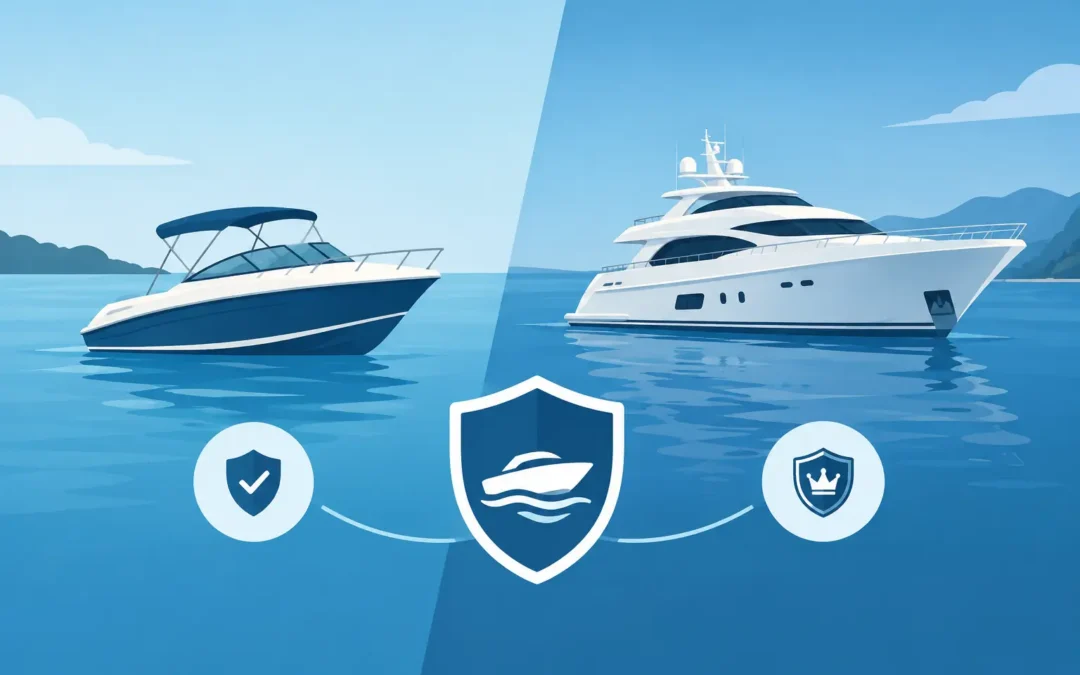
A 22-foot center console used for weekend fishing in Estero does not carry the same risks as a 55-foot motor yacht traveling to the Keys or the Bahamas. That is the practical issue behind boat insurance vs yacht insurance. Both policies can protect your vessel, your passengers, and your financial responsibility to others, but the policy structure, underwriting, and coverage expectations can be very different.
The name on the policy is not always the deciding factor. Insurers may use their own size, value, horsepower, and usage guidelines to determine whether a vessel belongs on a boat policy or needs yacht coverage. The better question is whether the policy reflects how and where you actually use the vessel.
Boat Insurance vs Yacht Insurance: The Main Difference
Boat insurance is generally designed for smaller recreational vessels, including fishing boats, pontoons, personal watercraft, runabouts, and many smaller cabin cruisers. It is often a straightforward package of physical damage and liability protection, with optional coverages based on the boat and its equipment.
Yacht insurance is usually built for larger, more valuable, or more complex vessels. A yacht policy may involve a detailed marine survey, an agreed value settlement, broader navigation territories, crew considerations, and higher liability limits. It may also place more specific responsibilities on the owner, such as maintaining the vessel to survey recommendations or following hurricane preparedness requirements.
There is no universal length at which a boat becomes a yacht for insurance purposes. Some carriers begin treating vessels as yachts around 26 to 30 feet, while others focus more heavily on value, construction, speed, age, or intended use. A 28-foot offshore vessel with high-performance engines may require more specialized underwriting than a longer, slower cruiser used only in protected coastal waters.
What a Standard Boat Policy May Cover
For many Florida boat owners, a boat policy provides a practical foundation. It commonly includes physical damage coverage for the vessel, liability coverage for injuries or property damage you cause, and medical payments coverage for certain passenger injuries regardless of fault.
Physical damage protection may apply to collision, theft, vandalism, fire, and weather-related losses, subject to the policy terms and deductible. Coverage can often extend to permanently attached equipment, trailers, and personal effects, although limits for fishing gear, electronics, and other accessories may be lower than owners expect.
Liability coverage deserves close attention. Florida law does not generally require recreational boat insurance, but a serious accident can create significant financial exposure. Liability may help pay for another person’s injuries, damage to another boat or dock, and certain legal defense costs if you are sued. Marinas, lenders, and storage facilities may also require proof of liability insurance and set minimum limits.
A standard policy may be a good fit if your vessel has a modest value, stays within local or coastal waters, and is used primarily for personal recreation. Still, “standard” does not mean identical. Exclusions, deductibles, navigation limits, and settlement methods vary from carrier to carrier.
When Yacht Insurance May Make More Sense
Yacht coverage is typically appropriate when the vessel represents a larger financial investment or has operational risks that go beyond a casual day boat. That can include larger motor yachts, sailing vessels, liveaboard boats, luxury cruisers, and boats that routinely travel farther from shore.
One major distinction is the way a yacht policy may value the vessel. Many yacht policies use agreed value coverage. Before a loss occurs, you and the insurer agree on the insured value of the yacht. If the vessel is declared a covered total loss, the policy generally pays that agreed amount rather than reducing the payment for depreciation, assuming policy conditions are met.
Actual cash value coverage, which may be more common on some boat policies, can account for depreciation at the time of a loss. It can cost less upfront, but it may leave a gap between the insurance payment and the amount needed to replace a vessel or its equipment. Neither approach is automatically better. The right choice depends on the boat’s age, market value, budget, and how much out-of-pocket risk you are willing to accept.
Yacht policies may also offer more tailored protection for tenders, navigation systems, fine furnishings, personal belongings, and emergency towing. They can address the realities of owning a vessel with multiple systems, higher repair costs, and a more extensive cruising range.
Navigation Territory Matters in Florida
Your declared navigation area is one of the most important parts of a marine policy. A boat used on inland waterways around Southwest Florida faces a different risk profile than one traveling regularly to the Dry Tortugas, the Florida Keys, the Bahamas, or the Caribbean.
A policy may restrict coverage to certain waters or require advance approval before extending a trip outside the listed territory. Do not assume that a destination is covered simply because the vessel is capable of making the trip. Crossing into international waters or traveling beyond a coastal mileage limit without the right endorsement can create a coverage problem at the worst possible time.
For yacht owners, navigation territory can also affect premium, deductible, survey requirements, and hurricane provisions. If your plans change during the year, update the policy before casting off.
Hurricane and Named Storm Considerations
Florida boat owners need to examine windstorm provisions carefully. A named storm deductible may be separate from the standard deductible and may be a percentage of the vessel’s insured value. On a high-value yacht, that percentage can be substantial.
Some policies require owners to follow a hurricane plan, particularly if the vessel remains in a coastal marina during storm season. The plan may address whether the boat will be hauled out, moved to a designated location, secured in a slip, or managed by a captain or marina. A policy is not a substitute for preparation, and failing to take reasonable protective steps can complicate a claim.
Ask how the insurer handles haul-out expenses, storm-related damage, and temporary relocation. The answer may influence where you keep the vessel and how you prepare each season.
Coverage Details Worth Comparing
Whether you need boat or yacht insurance, compare the policy beyond the premium. A lower price can reflect a higher deductible, narrower territory, lower liability limit, or reduced coverage for equipment.
Pay particular attention to wreck removal and pollution liability. If a vessel sinks or is damaged in a way that creates a fuel spill or navigation hazard, the owner may be responsible for costly cleanup and removal. These expenses can exceed the value of an older boat quickly.
Uninsured or underinsured boater coverage is another valuable consideration. It can help protect you and certain passengers if another boater causes an accident but lacks enough liability insurance. Given that many recreational vessels are uninsured, this coverage can be especially relevant.
Towing coverage should also match your boating habits. Emergency service on the water can be expensive, especially offshore. Some policies include limited assistance, while others offer broader towing and roadside-style benefits for trailerable boats. Review the distance limits and reimbursement amounts rather than assuming every towing situation is covered.
Finally, tell your agent about paid captains, crew, charters, rentals, tournaments, business use, and liveaboard arrangements. Personal recreational coverage may not respond to every commercial or compensated activity. A small change in use can require a different policy structure.
Choosing the Right Policy for Your Vessel
Start with a clear picture of the boat itself: its year, make, length, engines, value, safety equipment, and major upgrades. Then consider how you use it. Local weekend use, offshore fishing, extended cruising, and seasonal travel each call for a different conversation about territory and liability.
For larger or older vessels, expect the insurer to request a marine survey. A survey gives the carrier a professional assessment of the vessel’s condition, value, and seaworthiness. It may identify repairs that need to be completed before coverage is issued or renewed. While that can feel inconvenient, it also helps owners identify problems before they become expensive losses.
An independent agency can help compare coverage structures across available carriers, rather than treating every vessel as if it has the same needs. Lane Insurance Group can help Florida boat owners review the vessel, cruising plans, storage arrangements, and policy options in plain language.
Before your next trip, take a few minutes to read the declarations page, confirm the navigation territory, and make sure the insured value still reflects the vessel you own today. A policy that fits your actual boating plans offers more than a certificate for the marina – it gives you a clearer path forward when conditions on the water change.