
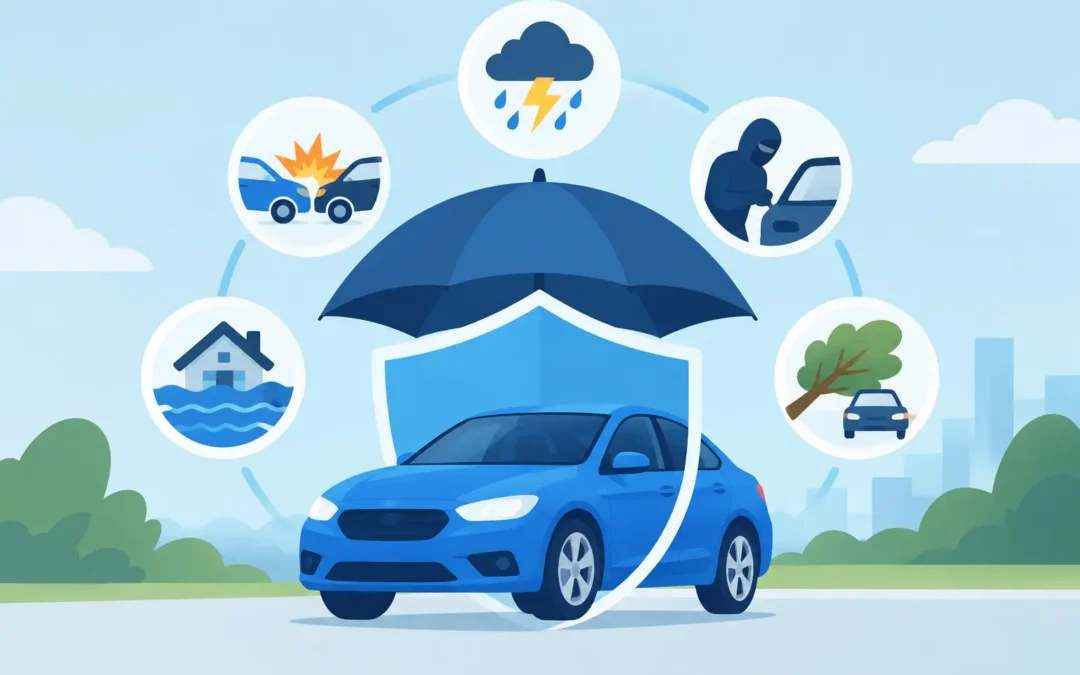
A palm frond cracks a windshield after a summer storm. A driver hits a deer on a dark road. A car is stolen from an airport parking lot. These are the situations behind a common question: what does comprehensive insurance cover? Comprehensive coverage can help pay to repair or replace your vehicle after many types of damage that do not result from a collision with another vehicle or object.
For Florida drivers, that distinction matters. Weather, falling debris, flooding, vandalism, and glass damage can create expensive surprises even when you have not caused an accident. Still, comprehensive insurance is not a catch-all policy. Knowing where its protection begins and ends helps you choose coverage that fits the car you own and the financial risk you are willing to take.
What comprehensive insurance covers
Comprehensive coverage is optional physical damage coverage for your vehicle. It generally pays for covered losses caused by events other than a crash, less the deductible you select. Your policy’s terms, exclusions, vehicle value, and insurer all affect the final claim outcome.
Most comprehensive policies cover damage or loss from theft, fire, vandalism, hail, windstorms, falling objects, civil disturbance, and contact with an animal. It can also apply to damage from a tree limb, flying debris, or a rock that cracks your windshield.
In Florida, comprehensive coverage is especially worth considering because of weather exposure. A hurricane, tropical storm, or heavy rain event can damage a parked vehicle through wind, falling branches, or floodwater. If water enters a vehicle while it is parked and damages its electrical system or interior, comprehensive coverage may apply, subject to the policy deductible and conditions.
One detail deserves attention: a collision with an animal is usually handled under comprehensive coverage, not collision coverage. If a deer runs into the road and you strike it, that is commonly a comprehensive claim. If you swerve to avoid the animal and strike a guardrail, the guardrail damage is generally a collision claim instead.
Common covered situations
The following examples are commonly associated with comprehensive insurance:
- Your parked car is damaged by a fallen tree branch during a storm.
- Someone breaks into your vehicle and steals it or damages the ignition.
- A fire damages the vehicle, whether the source is a nearby structure or a vehicle-related incident covered by the policy.
- Hail, windblown debris, or floodwater damages the exterior, interior, or mechanical components.
- A rock thrown from the road cracks your windshield or another window.
- Someone keys the paint, breaks a window, or otherwise vandalizes your parked car.
Coverage applies to the vehicle itself, up to the limits and valuation method in your policy. It does not necessarily cover every personal item inside the car. A laptop, purse, tools, or other belongings stolen from a vehicle may be addressed by a homeowners or renters policy instead, depending on the item and policy terms.
What comprehensive insurance does not cover
Comprehensive coverage is valuable, but it does not replace the other parts of an auto policy. It generally will not pay for damage from a crash with another car, a building, a pole, or a pothole. Those losses typically fall under collision coverage.
It also does not pay for injuries to you or your passengers, injuries you cause to others, or damage you cause to someone else’s property. Those situations involve coverages such as personal injury protection, bodily injury liability, property damage liability, medical payments, or uninsured motorist coverage, depending on your policy and state requirements.
Normal wear and tear is not covered. That includes mechanical breakdown, worn tires, rust, routine maintenance, and gradual deterioration. Damage caused by neglect may also be excluded. For example, an engine failure caused by a lack of oil is not the kind of sudden external event comprehensive coverage is designed to insure.
There can be gray areas. Rodent damage, for example, may be covered by some policies but excluded or limited by others. Damage from driving into standing water may be treated differently than damage to a vehicle that was safely parked when floodwater rose. The best answer comes from the specific policy language and the facts of the loss.
Comprehensive insurance vs. collision coverage
Comprehensive and collision are often purchased together because both protect the value of your own vehicle. The difference is the cause of damage.
Collision coverage responds when your vehicle hits another vehicle or object, or when it rolls over. Comprehensive coverage responds to many non-collision events, such as theft, weather, animal strikes, and falling objects.
Consider two Florida storm scenarios. If a branch falls on your parked SUV, comprehensive coverage may help pay for repairs. If wet roads cause you to slide into a light pole, collision coverage is the protection that may apply. Both incidents may happen during the same storm, but they are handled differently.
If you finance or lease a vehicle, your lender or leasing company will usually require both comprehensive and collision coverage until the loan or lease obligation ends. Even after the vehicle is paid off, keeping these coverages may make sense if replacing or repairing the car out of pocket would strain your budget.
Deductibles, vehicle value, and claim payments
Your comprehensive deductible is the amount you pay before the insurer contributes to a covered claim. If a repair costs $2,500 and your deductible is $500, the insurer may pay $2,000, assuming the loss is covered. Choosing a higher deductible can lower your premium, but it means taking on more cost when a claim occurs.
For a total loss, insurers commonly base payment on the vehicle’s actual cash value immediately before the loss, not on what you originally paid or the cost of a brand-new replacement. Actual cash value reflects age, mileage, condition, and the local market. If you owe more on a loan than the vehicle is worth, comprehensive coverage alone may not erase the remaining balance. Gap coverage may help in certain financed or leased vehicle situations.
Custom wheels, specialty electronics, aftermarket equipment, and permanently installed accessories may have limited coverage unless they are specifically disclosed or added to the policy. This is particularly relevant for trucks, motorcycles, recreational vehicles, and vehicles with extensive upgrades.
Windshield claims in Florida
Windshield damage is common on Florida roads, where gravel, construction traffic, and sudden temperature changes can turn a small chip into a spreading crack. Comprehensive coverage is the part of an auto policy that typically handles glass damage.
Florida rules and insurer options can affect whether a deductible applies to a windshield replacement. Many Florida policies provide a $0 deductible for windshield claims, but policy details vary, and other vehicle glass may be handled differently. Before scheduling a replacement, review your declarations page or ask your agency how the claim will be processed.
A quick repair of a small chip can sometimes prevent a full windshield replacement. Reporting the damage promptly also gives you a clearer picture of your deductible, repair options, and whether advanced driver-assistance cameras need recalibration after new glass is installed.
Is comprehensive coverage worth it?
The answer depends on your vehicle, finances, location, and comfort with risk. Comprehensive coverage is often a practical choice for newer vehicles, financed cars, vehicles parked outside, or cars that would be difficult to replace after theft or storm damage. It can also bring meaningful peace of mind for drivers in areas prone to severe weather.
For an older vehicle with a low market value, the calculation may be different. Compare the annual premium and deductible with the vehicle’s current value. If a potential claim payment would be small after the deductible, you may decide to self-insure the risk. That is a personal financial decision, not a one-size-fits-all rule.
Also consider where and how the vehicle is used. A car stored in a garage may face less weather exposure than one parked outdoors every day. A vehicle driven through rural areas may have more animal-strike risk. A car parked in busy public lots may have greater exposure to theft or vandalism.
Questions to ask before choosing coverage
When reviewing an auto policy, ask whether comprehensive and collision are both included, what deductible applies to each, and how your insurer values a total loss. Confirm whether rental reimbursement is included, because it is usually a separate optional coverage rather than an automatic part of comprehensive insurance.
It is also wise to ask about windshield coverage, aftermarket equipment limits, and coverage for a loan or lease payoff gap. An independent agency can compare these details across policy options rather than focusing only on the premium.
A good auto policy should make sense before a storm, theft, or unexpected loss forces the issue. Lane Insurance Group can help Florida drivers review the vehicle protection they have, identify gaps that matter, and select deductibles and coverage options they can feel prepared to use.